
TL;DR: Austin’s apartment construction pipeline has dropped by more than 60% since its 2024 peak — but the effects of that building boom aren’t evenly distributed. Seven corridors absorbed the bulk of new supply, and several of them still have enough inventory working through lease-up that renters can negotiate concessions of 4-12 weeks free. Below, we break down each corridor: what’s been built, what’s still coming, and where the leverage sits right now.
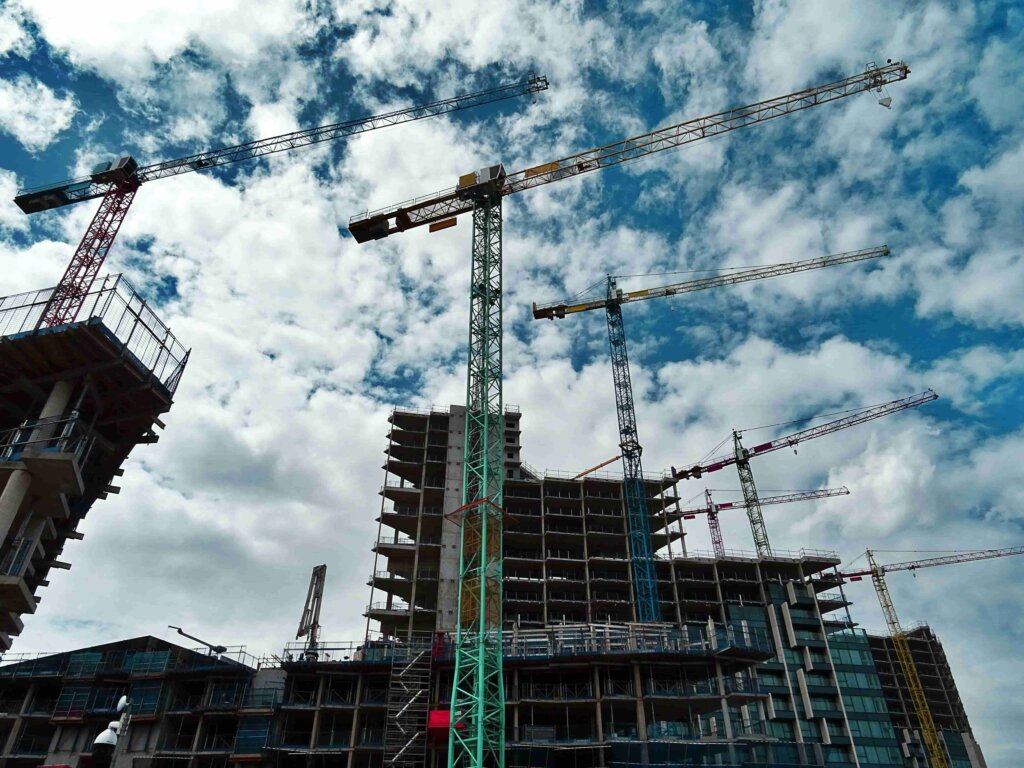
We track Austin apartment construction data across every submarket, and here’s what stands out heading into spring 2026: the metro delivered roughly 33,000 apartment units in 2024 and another 17,500 in 2025. That made Austin the #1 city for construction in apartment development, according to RentCafe’s annual analysis. The result? A metro-wide vacancy rate that climbed above 14% by late 2025, with 65% of apartment complexes offering some form of concession to fill units.
But those numbers describe the metro as a whole. The reality on the ground varies wildly depending on which corridor you’re looking at. East Riverside absorbed nearly 4,000 new units in the year ending Q3 2025. South Austin suburbs barely saw any. That difference matters if you’re trying to figure out where your rent dollar stretches furthest, and where your negotiating position is strongest.
The construction pipeline is now shrinking. CoStar projects somewhere around 4,600 new units will deliver in 2026. That’s a 74% drop from 2025. Construction starts hit a 10-year low in 2024, which means the supply wave is cresting. For renters, that creates a specific window: corridors that are still absorbing recent deliveries offer the best deals right now, but that window tightens as the pipeline dries up and occupancy climbs back toward equilibrium.
This guide breaks down the seven corridors where construction concentrated, what each one looks like for renters right now, and what our team expects over the next 12-18 months.
[INTAKE FORM: “Find Apartments in Austin’s Best-Deal Corridors”]
How to Read This Guide
Before we walk through each corridor, here’s the framework. For each area, we cover:
- What was built — units delivered or in lease-up from the 2022-2025 construction wave
- What’s still coming — units under construction or permitted
- Dominant price tier — whether the corridor is primarily Class A/Luxury, Class A, or mixed
- Supply vs. demand balance — whether the area is oversupplied (concessions likely) or tighter (less leverage)
- Renter takeaway — a plain-language summary of what to expect
If you want to understand why concessions exist and how to calculate the actual cost after specials, our net effective rent guide covers the math in detail. The short version: a property advertising $1,800/month with 2 months free on a 12-month lease actually costs $1,500/month in net effective rent. That gap is where the real value hides.
Austin’s Construction Pipeline at a Glance (March 2026)
| Metric | 2024 | 2025 | 2026 (Projected) |
|---|---|---|---|
| Units delivered (metro) | ~33,000 | ~17,500 | 4,600–10,300 |
| Metro vacancy rate | ~15% (peak) | 14.2% (Q4) | Declining toward 10-11% |
| Average asking rent | ~$1,432 | ~$1,525 | Stabilizing; growth projected late 2026 |
| % of complexes offering concessions | 60%+ | 65% | Expected to decline as supply tightens |
| Construction starts | 10-year low | Continued decline | Minimal new starts expected |
Sources: CoStar, RealPage, Matthews Real Estate Investment Services, Austin Apartment Association (2025-2026 data). The 2026 delivery range reflects differing methodologies: CoStar projects 4,600 units, RealPage projects 10,313, and the Austin Apartment Association estimates 12,000-13,000. The gap stems from how each source defines the Austin metro boundary and whether projects in lease-up count as “delivered.”
That table tells the macro story: 50,000+ units delivered in two years, pipeline shrinking, concessions still widespread but with an expiration date. The corridor-level data below tells you where to act on it.
Corridor 1: East Riverside / Pleasant Valley
What was built: East Riverside absorbed more new construction than any other Austin corridor during the boom. The East Austin submarket, which includes this corridor, received 3,989 new units in the year ending Q3 2025. That’s the highest volume of any Austin submarket. Multiple Class A communities delivered along Riverside Drive and Pleasant Valley Road between 2023 and 2025, including the Edison Apartments and the Lenox Boardwalk (339 units at Pleasant Valley and Elmont Drive).
What’s still coming: The long-term pipeline here dwarfs every other corridor on this list. The River Park development (formerly “Project Catalyst”) at Riverside Drive and South Pleasant Valley Road is a 109-acre, 10-million-square-foot mixed-use project expected to deliver 4,700+ residential units over the next 10-20 years. It also includes a future Austin Light Rail station. Phase one of the broader Riverside corridor master plan is moving: the 125-acre Grove-Riverside site is in active planning with the City of Austin, Austin Transit Partnership, and CapMetro. But near-term deliveries are slowing. Most recently permitted projects are now in lease-up, not construction.
Dominant price tier: Primarily Class A and Luxury/A+. New construction along this corridor skews toward higher-end finishes: quartz counters, in-unit washer/dryer, keyless entry, and pool/fitness center packages. 1-bedroom rents at new communities range $1,400-$1,900 before concessions.
Supply vs. demand: Oversupplied. Berkadia reported Riverside occupancy at 90.6% in mid-2024, among the weakest in the metro. Concessions of 6-12 weeks free are common at newer communities still in lease-up phase. The proximity to Oracle’s headquarters and the planned light rail station support long-term demand, but right now, supply outpaces absorption.
Renter takeaway: East Riverside is where concession leverage is strongest right now. Class A properties that delivered in 2023-2025 are offering 6-12 weeks free, and some are stacking waived admin fees on top. Calculate net effective rent before comparing. A community advertising $1,700/month with 8 weeks free on a 13-month lease actually costs about $1,437/month. That’s one of the strongest value positions in central Austin for newer construction. One thing to plan for: renewal rates in year two will likely increase 5-10%.
For a detailed breakdown of this area, see our East Austin apartment guide.
Corridor 2: South Lamar / Barton Springs Road
What was built: South Lamar has seen steady but not explosive construction compared to East Riverside. New communities have delivered along the South Lamar corridor between Barton Springs Road and Ben White Boulevard, mostly mid-rise Class A projects. The area’s biggest future project, the $1 billion Brodie Oaks redevelopment at South Lamar, will eventually bring 1,700 residences, 1.26 million square feet of commercial space, and 13.7 acres of open space. That’s a long-term play, though. Foundation Communities is partnering on roughly 200 affordable units within the project.
What’s still coming: Brodie Oaks is in its planning and approvals phase and won’t deliver residential units for several years. Short-term supply additions are limited. A handful of smaller infill projects are in various permitting stages, but nothing approaching the scale of what East Riverside has absorbed.
Dominant price tier: Class A to Luxury. South Lamar is part of the 78704 corridor, and rents reflect that. 1-bedroom apartments in newer communities along South Lamar range $1,500-$2,000, with some properties pushing above $2,200 depending on proximity to Barton Springs and Zilker Park.
Supply vs. demand: Tighter than most corridors. South Austin (which includes this area) had one of only two submarkets in the metro with occupancy above 94% in October 2025, according to RealPage. Limited new supply plus strong demand from renters who want walkable access to Zilker and South Congress means less negotiating leverage here.
Renter takeaway: South Lamar doesn’t offer the same concession depth as the heavy-construction corridors. Properties here filled faster because inventory is limited and demand stays consistent. You’ll still find some specials at communities that delivered in 2024 and are still stabilizing, but 1-2 months free is more typical than the 6-12 weeks you’d see on East Riverside. This is a “pay a premium for location” corridor. If you’re weighing South Lamar against other walkable areas, our Downtown Austin apartment guide covers the six sub-districts worth comparing. Our South Austin apartment guide has current pricing by sub-neighborhood.
Corridor 3: North Burnet / Domain Area
What was built: The Domain and surrounding North Burnet/Gateway district have absorbed significant new supply. North Central Austin received 1,749 new units in the year ending Q3 2025, with much of that concentrated in and around the Domain. Recent deliveries include Solaris House at Uptown ATX (341 units) and The Albright on Burnet Road (266 units). The North Burnet/Gateway Regulating Plan has enabled taller, denser projects. Zoning amendments now permit buildings up to 350 feet with density bonuses, compared to the original 60-foot cap.
What’s still coming: The pipeline remains active here. Quarry Oaks (297 units at 10911 Stonelake Blvd.) is in planning stages. The biggest long-term play is Brandywine Realty Trust’s $3 billion Uptown ATX, a 66-acre transit-oriented development on the former IBM/Broadmoor campus. At full buildout, it will bring nearly 7 million square feet of workspace and residential units. The Uptown ATX development continues to build out with additional residential, office, and retail phases, anchored by a new CapMetro Red Line station expected within the next couple of years. City planners are actively positioning North Burnet/Gateway as Austin’s “second downtown,” which means continued development approvals for years to come.
Dominant price tier: Luxury/A+ and Class A. Domain-area apartments typically range $2,200-$2,800 for a 1-bedroom at luxury properties, with Class A options in the $1,800-$2,300 range. Walk Score in the walkable core around Domain Northside is approximately 78, which supports the premium.
Supply vs. demand: Moderately oversupplied. New lease-ups are competing with each other and with established Domain properties for the same renter pool, much of it drawn by employers like Apple, Indeed, IBM, and others along the Parmer Lane corridor. Concessions of 4-8 weeks free are standard at newer communities.
| Property Type | Typical 1BR Rent (Advertised) | Common Concession | Net Effective Rent |
|---|---|---|---|
| Luxury/A+ (Domain core) | $2,400-$2,800 | 6-8 weeks free | $2,030-$2,370 |
| Class A (North Burnet) | $1,800-$2,200 | 4-6 weeks free | $1,590-$1,945 |
| Class A (Burnet Rd south of Domain) | $1,500-$1,900 | 2-4 weeks free | $1,385-$1,775 |
Ranges are estimates based on our team’s tracking of current market conditions. Verify pricing directly with communities.
Renter takeaway: The Domain area gives you solid leverage right now, especially at communities that opened in the last 18 months and are still pushing to hit stabilized occupancy. The real question is whether you’re paying the Domain walkability premium for a reason. Properties even a mile south on Burnet Road can run 15-25% cheaper for similar finishes, and the Broadmoor station will improve transit access to those areas. Our Domain area apartment guide maps the specific communities and price tiers.
If you’d rather talk through the options with someone who tracks this corridor daily, give us a call at (512) 360-0852. Our team can pull current availability and concessions for the specific buildings you’re considering.
Corridor 4: East MLK / Chestnut / Plaza Saltillo
What was built: The area along East MLK Boulevard, through the Chestnut neighborhood, and down to the Plaza Saltillo transit-oriented development has seen a mix of mid-rise and mixed-use projects. The Residences at Saltillo, anchored by the Plaza Saltillo MetroRail station at East 5th Street, delivered studios, one-bedrooms, and two-bedrooms with direct rail access. Additional projects have filled in along East 7th Street and the East Cesar Chavez corridor. OHT Partners has a 360-unit project called 7th & Pleasant Valley in planning, which would add nearly 578,000 square feet of mixed-use space.
What’s still coming: Several projects are in permitting. Seabrook Square on Manor Road is a $52 million affordable housing development. Trinsic Cesar Chavez, a $40 million complex, adds another 310 apartments. Airport Crossing near ABIA adds 256 units. Completion dates span 2025-2026 for these projects. Endeavor Real Estate Group, the developer behind Plaza Saltillo, has proposed a 1,400-apartment mixed-use redevelopment of the former Borden Dairy plant in Far East Austin (plus office space and a hotel), though that’s still in early rezoning stages.
Dominant price tier: Mixed. Class A and some Luxury in the Saltillo area, transitioning to Class A/B pricing further east along MLK and Chestnut. Studios at Residences at Saltillo start around $1,300; 1-bedrooms range $1,500-$1,900. Further east, older stock drops into the $1,100-$1,500 range.
Supply vs. demand: Moderately oversupplied near Saltillo and East 7th Street, where multiple new projects compete for the same renters. Further east along MLK, density is lower and competition between communities is less intense. The MetroRail station is a long-term demand driver. But current ridership doesn’t yet generate the kind of foot traffic that makes transit-oriented premiums feel justified for every renter.
Renter takeaway: The best deals in this corridor cluster closest to East 7th and Pleasant Valley, where the concentration of new Class A projects creates direct competition. The Plaza Saltillo area commands a premium for rail access and walkability to East Austin’s restaurant and bar scene, but even there, concessions are available. Moving east on MLK, you trade walkability for lower rents. This corridor is worth watching. It’s one of the few areas where CoStar still projects new starts in 2026 due to strong demand in eastern Travis County.
Corridor 5: South Congress South of Ben White
What was built: South of Ben White Boulevard, South Congress transitions from the high-foot-traffic SoCo corridor into a more suburban residential area stretching toward William Cannon and Slaughter Lane. New construction here has been limited compared to the northern corridors. A few projects have delivered or are in planning: SoCo House, a townhome project just off South Congress near Ben White (targeting late 2025/early 2026 construction start), and Bailey at Stassney, a 104-unit multifamily building at 5516 Hummingbird Lane.
What’s still coming: The pipeline is thin. This stretch of South Congress doesn’t have the zoning entitlements or density bonuses that fuel the large-scale projects on East Riverside or in the Domain. Most of the inventory is older Class B and Class C stock: renovated communities that offer lower rents but fewer amenities.
Dominant price tier: Class B and Class B+. This is a value corridor. 1-bedroom rents south of Ben White on or near South Congress range $1,100-$1,500 for older renovated units. Newer communities that have delivered along Slaughter Lane command $1,400-$1,800.
Supply vs. demand: Close to balanced. South Austin posted above-94% occupancy in late 2025, and the lack of large-scale new construction means supply hasn’t overwhelmed demand the way it has in East Riverside or the Domain. Concessions exist at some newer properties, but the older stock has less room to negotiate.
Renter takeaway: Don’t expect the kind of concession leverage here that you’d find in the heavy-construction corridors. What you get instead is lower base rents on older but functional apartments, plus proximity to both SoCo (north of you) and Southpark Meadows retail (south). Newer communities along Slaughter Lane offer Class A finishes at prices that undercut the same product in North Austin or East Riverside. Net effective rents at the newest South Austin communities can drop below $1,300/month with current specials.
Corridor 6: North I-35 (Rundberg to Parmer)
What was built: The North I-35 corridor between Rundberg Lane and Parmer Lane sits within the broader North Central Austin submarket, which received 1,749 new units in the year ending Q3 2025. New Class A developments have delivered along the corridor, primarily targeting renters who commute to the Domain, Apple’s Parmer Lane campus, or other employers along the 183/Parmer corridor. This area also includes some of the metro’s steepest rent declines. The adjacent Pflugerville/Wells Branch submarket saw rents drop 11.9% year-over-year, the sharpest decline in the metro.
What’s still coming: The Far North Austin submarket (which overlaps with this corridor) is projected to see the largest inventory growth in 2025, a 15% expansion according to MMG Real Estate Advisors. Several mid-size projects are in permitting along Metric Boulevard and Parmer Lane, though nothing on the scale of the Uptown ATX development happening just west in the Domain area (see Corridor 3). The zoning along the I-35/Parmer intersection supports continued density, but financing conditions have slowed new starts.
Dominant price tier: Mixed, skewing Class A and Class B+. Closer to the Domain (Parmer end), newer Class A communities price 1-bedrooms at $1,500-$1,900. Near Rundberg, older Class B stock runs $1,000-$1,400. The I-35 construction project (expected to continue through 2030+) creates noise and access friction that suppresses rents along the immediate corridor.
Supply vs. demand: Oversupplied, particularly at the Class A tier. Multiple new communities along Parmer Lane and Metric Boulevard are actively competing for the same renter pool. Pflugerville and Wells Branch (just east on 45/I-35) have experienced some of the deepest rent drops in the entire metro, which forces North I-35 properties to match or risk losing tenants.
| Corridor Segment | Typical 1BR Range | Vacancy Pressure | Concession Availability |
|---|---|---|---|
| Parmer Lane / Tech Ridge | $1,500-$1,900 | High (new supply concentrated here) | 6-10 weeks free common |
| Braker to Rundberg | $1,200-$1,600 | Moderate | 2-6 weeks free |
| Rundberg corridor | $1,000-$1,400 | Lower (less new construction) | Limited at older stock |
Ranges based on our database tracking. Verify directly with communities.
Renter takeaway: North I-35 is one of the metro’s strongest buyer’s markets right now. New Class A communities near Parmer are cutting rents hard to fill units, and the spillover effect pushes older properties along the corridor to lower asking rents too. The trade-off: I-35 construction noise and traffic are real factors through at least 2030. Test-drive your commute during rush hour before signing. If you work in the Domain or along Parmer, this corridor offers some of the lowest net effective rents for Class A product anywhere in Austin.
Our team tracks this corridor closely. Call (512) 360-0852 if you want current availability at specific communities.
Corridor 7: South Austin (William Cannon / Slaughter)
What was built: The William Cannon and Slaughter Lane corridors represent Austin’s suburban south (78745 and 78748, primarily). Construction here has been lighter than the urban corridors, with a mix of newer Class A suburban communities and older renovated Class B stock. Communities like Cala (78748, opened 2025), The Prescott (South Congress and Slaughter), and several Estancia communities (Park at Estancia, View at Estancia, Estancia Villas) represent the newer inventory.
What’s still coming: Minimal. This part of South Austin doesn’t sit within any of the city’s major density bonus corridors or transit-oriented development zones. New development requires standard zoning approvals, and the suburban lot patterns don’t lend themselves to the high-density projects that characterized East Riverside or the Domain. Some smaller infill projects are in permitting, but nothing that would meaningfully shift the supply-demand balance.
Dominant price tier: Class B and Class A. Older renovated units along William Cannon and Slaughter Lane run $1,000-$1,300 for a 1-bedroom. Newer communities reach $1,400-$1,800. This is consistently one of the more budget-accessible corridors in Austin proper.
Supply vs. demand: Closer to equilibrium than the heavily-built corridors. South Austin’s above-94% occupancy rate reflects limited new supply meeting steady demand from cost-conscious renters, households with school-age children who want proximity to Austin ISD campuses, and commuters working along the I-35 South or Mopac corridors.
Renter takeaway: William Cannon and Slaughter won’t give you the deep concessions available in East Riverside or North I-35. But base rents are already lower, so the gap is smaller than it looks. Newer communities with concessions can bring net effective 1-bedroom rents below $1,200/month, some of the lowest in Austin for modern construction. The trade-off is that you’re car-dependent. Walk Scores below 40 are the norm. Brodie Lane between Slaughter and William Cannon tends to offer better commute options than areas deeper in Circle C or Oak Hill, where Y at Oak Hill traffic can add 20+ minutes.
Where the Leverage Actually Sits: A Summary
| Corridor | Supply Pressure | Concession Strength | Price Tier | Strongest Match |
|---|---|---|---|---|
| East Riverside / Pleasant Valley | High | Strong (6-12 weeks) | Class A / Luxury | Central location + deal-seeking |
| South Lamar / Barton Springs | Low | Limited (1-2 months) | Class A / Luxury | Walkability-first priorities |
| North Burnet / Domain | Moderate-High | Good (4-8 weeks) | Luxury / Class A | North Austin commuters, Domain walkability |
| East MLK / Chestnut / Plaza Saltillo | Moderate | Moderate (2-6 weeks) | Mixed (A/B) | East Austin character + transit access |
| S. Congress south of Ben White | Low | Limited | Class B/B+ | Lower base rents near SoCo |
| North I-35 (Rundberg–Parmer) | High | Strong (6-10 weeks) | Mixed (A/B) | Budget Class A, Parmer/Domain commuters |
| South Austin (Wm Cannon / Slaughter) | Low | Limited | Class B / A | Suburban pricing, 2-3BR floor plans |
The pattern is straightforward: corridors with the most new construction have the most negotiating leverage right now. East Riverside and North I-35 are the two strongest renter markets in the metro. South Lamar, South Congress south of Ben White, and the William Cannon/Slaughter area are tighter: good values at base price, but less room to negotiate.
What Happens Next: The Pipeline Is Closing
Here’s what our data shows about the trajectory: Austin’s construction starts hit a 10-year low in 2024. The under-construction inventory dropped 55% in a single year. With financing costs elevated and vacancy still above historical norms, developers aren’t breaking ground on new projects at anywhere near the 2021-2023 pace.
So what does that mean for the concession window?
It has an expiration date.
RealPage projects that select Austin submarkets could reach the “effectively full” mark of 95% occupancy during 2026, with rent growth returning in the second half of the year. CoStar is more conservative, projecting positive rent growth to resume in early 2027. Either way, the direction is clear: the supply glut is being absorbed, and the leverage renters have right now will fade.
If you’re planning a move in the next 6-12 months, the corridors with the heaviest recent construction are where to focus. Lock in a 12-month or 13-month lease at a newly delivered community while specials are still deep. Calculate the net effective rent, not the sticker price, using our custom search tool to compare actual costs across properties. And if you’re moving into a brand-new unit, budget for furnishing: our guide to the real cost to furnish an apartment in Austin breaks it down room by room.
Austin Apartment Development Map FAQ
Where is most apartment construction happening in Austin right now?
East Austin — specifically the East Riverside/Pleasant Valley corridor — has received the highest volume of new units over the past two years. North Central Austin (including the Domain/North Burnet area) and suburban Round Rock/Georgetown are the next largest. Construction starts across all corridors have dropped to their lowest point since 2011, so the pace is slowing dramatically.
How many new apartments were built in Austin in 2025?
The Austin metro area delivered approximately 17,500 new apartment units in 2025, down from roughly 33,000 in 2024. Austin proper accounted for about 15,195 of those units. The metro ranked #1 in the country for city-level apartment construction and #3 at the metro level (behind New York and Dallas-Fort Worth), according to RentCafe and KVUE reporting.
Are Austin apartment rents still dropping?
As of early 2026, asking rents are approximately 4-5% lower year-over-year across the metro, with some submarkets (Pflugerville/Wells Branch, Round Rock, Southeast Austin) seeing declines of 10% or more. Rents have been falling since mid-2022, driven by the oversupply of new inventory. Analysts project rent growth to stabilize in late 2026 and return to positive territory by early 2027.
What is a density bonus corridor in Austin?
Austin’s density bonus program allows developers to build taller and denser projects than standard zoning would permit, in exchange for including affordable housing units. Key corridors include East Riverside (where the 4700 Riverside project used density bonuses for height entitlements), North Burnet/Gateway (where the regulating plan allows up to 350-foot buildings with bonuses), and several transit corridors along planned Project Connect light rail routes. These bonus corridors attract the heaviest construction. That’s also why they’re where you see the most concessions.
Which Austin neighborhoods have the most apartment concessions right now?
Concessions are deepest in areas with the most recent new construction: East Riverside, North I-35 from Parmer to Rundberg, and the Domain/North Burnet area. CoStar data shows 65% of Austin complexes offered concessions in 2025. Class A properties in oversupplied corridors are offering 4-12 weeks free, waived admin fees, and reduced deposits. Our net effective rent guide tracks current specials across the metro.
How long will Austin apartment concessions last?
The concession window is tied to the construction pipeline. With starts at a 10-year low and deliveries projected to drop 60-74% in 2026 compared to 2025, the supply glut is being absorbed. RealPage projects select submarkets could reach “effectively full” occupancy (95%) during 2026, with rent growth returning in late 2026 or early 2027. Concessions should narrow as vacancy falls. Renters looking to lock in deals have an estimated 6-12 month window.
What does “lease-up” mean for renters?
Lease-up is the period when a newly built community is actively filling units for the first time. Properties in lease-up typically offer the deepest concessions because they need to hit occupancy targets, often 80-90%, to satisfy their financing terms. Once a property stabilizes (hits target occupancy), specials shrink. If you see a community advertising 8-12 weeks free, it’s likely still in lease-up, and that’s your window.
Is Austin still building apartments?
New construction starts have slowed dramatically. Construction starts dropped 66% in 2024 to a 10-year low. Only about 15,900 units were under construction as of Q4 2025, compared to over 40,000 at the peak. Some new starts are still happening in areas with strong demand (eastern Travis County and Southeast Austin), but the pace is a fraction of the 2021-2023 boom.
Where is the best value for a new apartment in Austin right now?
The strongest net effective rent values are in corridors with high supply pressure: East Riverside (where Class A 1-bedrooms can net below $1,450/month after concessions), North I-35 near Parmer (below $1,400/month for Class A), and parts of the Domain where newer communities are still in lease-up. For absolute lowest rents on newer construction, South Austin along William Cannon and Slaughter Lane offers 1-bedrooms below $1,200/month net effective.
What’s the difference between “units permitted” and “units under construction”?
Permitted units have received city approval to be built but construction hasn’t necessarily started. Units under construction have broken ground and are actively being built. Both matter for predicting future supply, but under-construction units are more reliable. Permitted projects can be delayed or canceled if financing falls through or market conditions shift. With Austin’s under-construction inventory down 55% from its peak, fewer future units are a near-certainty.
How does Austin’s construction pipeline compare to other Texas cities?
Austin ranked #1 among U.S. cities for apartment construction in 2025 and #3 at the metro level. Dallas-Fort Worth ranked #2 by metro, delivering 28,958 units (though that was a 22% drop from 2024). Houston and San Antonio also rank in the national top 10. Texas as a whole is on track to deliver over 81,000 apartments in 2025, the most of any state. Austin’s pipeline has shrunk faster than the other Texas metros, which means the rebalancing here may happen sooner.
The Bottom Line
Austin’s apartment construction boom created a specific, time-limited opportunity for renters. The corridors where that supply concentrated (East Riverside, North Burnet/Domain, North I-35, and the East MLK/Plaza Saltillo area) are where the leverage sits right now. Rents have dropped. Concessions are deep. Properties in lease-up are negotiating on everything from free months to waived fees to parking upgrades.
But the pipeline is closing. Starts are at decade lows. Deliveries are projected to fall 60-74% in 2026. Once occupancy climbs back toward 95%, the math changes. And it will.
We built our custom search tool to sort properties by net effective rent (actual cost after concessions, not advertised price) so you can see which communities in these corridors are offering the best real deals right now. If you want our team to pull current availability and concession data for any of the corridors in this guide, that’s what we do.
Want a personalized corridor recommendation? Our team at the Austin Apartment Team specializes in matching renters to the right submarket based on commute, budget, and timeline. The service is free to you. Apartment communities pay our referral fee from their marketing budget. Call us at (512) 360-0852 or start your search to see live net effective rent data.
Market data reflects available information as of March 2026 and is subject to change. Rent ranges are based on analysis of properties in our database and publicly available data from CoStar, RealPage, RentCafe, ApartmentData.com, Austin Apartment Association, and Matthews Real Estate Investment Services. Verify current pricing and availability directly with apartment communities.
