
TL;DR: Your Austin rent includes a built-in property tax cost that most renters never see. Apartment owners in Travis County pay a combined property tax rate of roughly 1.8–2.2% of assessed property value, and that bill is the single largest operating expense for most apartment complexes. When that tax bill goes up, your rent goes up at renewal. On a 200-unit complex assessed at $40 million, that’s $720,000–$880,000 per year in property taxes alone.
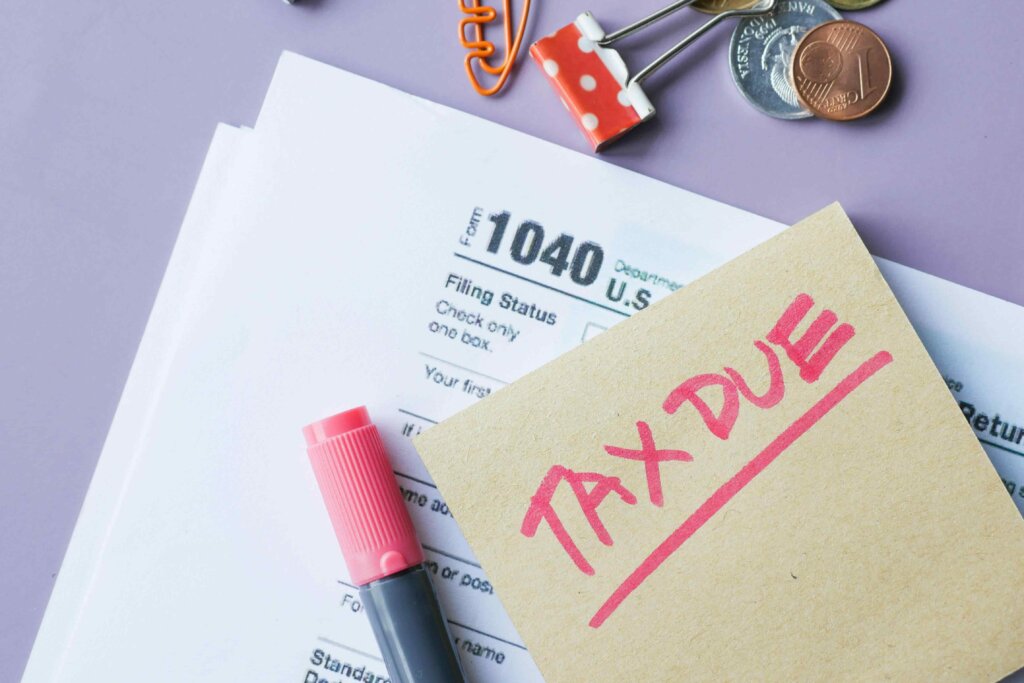
You get your renewal notice. Rent’s going up $75/month. The leasing office might mention “market conditions” or “increased operating costs.” What they won’t explain is that a large chunk of that increase has nothing to do with the apartment market and everything to do with Travis County’s property tax assessment.
We track Austin apartment pricing across 1,000+ properties. And one of the most consistent — and least understood — drivers of rent increases is something renters have zero control over: the property tax bill their apartment complex’s owner is paying on the building.
Here’s what makes this worth understanding. Property taxes are the largest single operating expense for most Austin apartment complexes, bigger than maintenance, insurance, payroll, or utilities. The NAA’s rent breakdown breaks it down simply: of every dollar you pay in rent, 93 cents goes to operating expenses and community support. Property taxes alone account for 11 cents of that dollar nationally. The owner keeps about 7 cents.
In Texas, the bite is bigger. The Texas Apartment Association estimates property taxes eat about 20 cents of every rent dollar paid by Texas tenants, according to The Texas Tribune. That’s nearly double the national average, and the share runs even higher in urban areas like Austin. The NAA’s 2023 data puts property taxes at 26.3% of total apartment operating expenses nationally (9.7% higher than the year prior), while an earlier 2021 survey measured 35% of operating expenses and 13.6% of gross potential rent.
When that expense goes up, owners don’t absorb it. They pass it forward. To you. Through rent.
One important caveat: the trend isn’t always upward. In 2024, Austin was an outlier nationally. The NAA’s most recent benchmarking showed Austin apartment operating expenses fell 6.4% year-over-year, driven partly by lower property tax assessments and reduced advertising costs. That relief followed years of aggressive increases, and TCAD’s 2025 apartment reappraisals (up 15.6%) suggest the dip was temporary.
This article breaks down exactly how that mechanism works, what the actual numbers look like in Austin, and why renters effectively pay a higher tax rate per unit than homeowners living next door.
How Property Tax Pass-Through Actually Works
Apartment complexes operate on what’s called a net operating income (NOI) model. The owner collects rent from all units. From that revenue, they subtract operating expenses: property management, maintenance, insurance, utilities, payroll, and — the big one — property taxes. What’s left is the owner’s income (or what covers the debt on the property).
When any major expense line increases, it directly pressures the owner’s NOI. The owner has two options: absorb the cost (make less money) or raise rents to cover it. On a large, professionally managed apartment complex, the kind with investors, lenders, and asset managers watching quarterly performance, absorbing cost increases isn’t really on the table.
So the math works like this:
| Component | Example: 200-Unit Complex |
|---|---|
| Assessed property value | $40,000,000 |
| Combined property tax rate | 2.0% |
| Annual property tax bill | $800,000 |
| Property tax per unit/year | $4,000 |
| Property tax per unit/month | $333 |
That $333/month is built into your rent whether you know it or not. It’s not a separate line item on your lease. It’s baked into the base rent.
Now imagine TCAD (Travis Central Appraisal District) raises the assessed value of that complex by 10%, from $40 million to $44 million. The new tax bill: $880,000. That’s an additional $80,000 the owner needs to cover. Spread across 200 units, that’s $400 per unit per year, or about $33/month per unit.
That $33 doesn’t feel like much in isolation. But it’s only the property tax portion of your rent increase. Add rising insurance premiums, maintenance costs, and the owner’s desired return, and you start to see how renewal increases of $75–$150/month come together.
Research backs up the pass-through mechanism. A study from MIT’s real estate center analyzed 30 years of commercial property data in Massachusetts and found that landlords raised rents enough to absorb 80–90% of property tax changes. In high-demand areas like downtown Boston, each dollar of tax increase translated to $1.06–$1.39 in rent increase.
That study focused on commercial office leases, where tax pass-through clauses are often written directly into contracts. Residential apartments work differently: there’s no escalator clause in your lease, and the pass-through is implicit rather than contractual. But the economic pressure is the same. When the tax bill goes up, the owner’s margins shrink, and rent adjusts upward at renewal to compensate.
Chris Newton, the Texas Apartment Association’s executive vice president, told The Texas Tribune directly: property taxes are the number one expense for Texas landlords. That’s not lobbying spin. It’s reflected in the operating budgets of every large apartment complex in Austin.
Austin’s Property Tax Rate: Where It Ranks and What It Means
Texas doesn’t have a state income tax. Instead, the state relies heavily on property taxes to fund local services: schools, infrastructure, emergency services, county operations. That makes Texas property tax rates among the highest in the country.
“Property tax rate” in Austin isn’t one number, though. Your apartment complex’s owner pays taxes to multiple entities, and the total rate depends on exactly where the property sits.
Here’s how the rates break down for a typical property in the City of Austin / Travis County / Austin ISD:
| Taxing Entity | FY 2025-26 Rate (per $100 value) | Approximate % |
|---|---|---|
| Austin ISD (school district) | $0.9252 | ~0.93% |
| City of Austin | $0.5240 | ~0.52% |
| Travis County | $0.3758 | ~0.38% |
| Austin Community College | varies | ~0.10% |
| Travis County Healthcare District | varies | ~0.10% |
| Other (MUDs, special districts) | varies | varies |
| Typical Combined Total | ~1.8–2.2% |
That combined rate means an apartment complex assessed at $40 million generates a property tax bill somewhere between $720,000 and $880,000 per year.
For context: WalletHub’s 2026 report found that Texas homeowners pay a median of $4,232 in annual property taxes. The state has the seventh-highest property tax burden nationally. But homeowners benefit from exemptions that apartment complexes don’t get, a point we’ll come back to.
The school district portion is the largest slice. Austin ISD accounts for nearly half of the typical property owner’s tax bill. And here’s where it gets frustrating for renters: much of AISD’s school tax revenue doesn’t even stay in Austin. Under Texas’s recapture system (sometimes called “Robin Hood”), property-wealthy districts like AISD send money to the state for redistribution to other districts. So renters in Austin are indirectly funding school districts elsewhere in Texas through their rent.
Travis County alone has 127 taxing entities including 21 cities, 16 emergency districts, 54 municipal utility districts, and 15 school districts. Property owners can review how proposed budgets and tax rates affect their bills at TravisTaxes.com.
Why Your Rent Varies by Area: Property Taxes Are Part of It
If you’ve compared rent across Austin’s submarkets, you already know the spread is wide. A 1BR near the Domain might run $1,750–$2,800/month while a similar unit in Pflugerville or Round Rock is $1,200–$1,600. Amenities and location drive most of that gap, but the tax bill matters too.
Here’s what’s counterintuitive: the tax rates across Austin’s submarkets are surprisingly similar (mostly 1.8–2.3%). The real difference is in property values. A Class A complex in Central Austin might be assessed at $250,000+ per unit. A Class B complex in Pflugerville might be assessed at $120,000 per unit. Apply nearly the same tax rate to those two valuations and you get very different tax bills per door.
| Area | Typical Assessment per Unit | Combined Tax Rate | Tax Bill per Unit/Year | Tax Cost per Unit/Month |
|---|---|---|---|---|
| Central Austin (78701, 78704) | $200K–$280K | ~2.0–2.2% | $4,000–$6,160 | $333–$513 |
| North Austin/Domain (78758) | $180K–$240K | ~1.9–2.1% | $3,420–$5,040 | $285–$420 |
| Cedar Park/Leander | $140K–$180K | ~2.0–2.3% | $2,800–$4,140 | $233–$345 |
| Pflugerville | $120K–$160K | ~2.0–2.2% | $2,400–$3,520 | $200–$293 |
| Round Rock | $130K–$170K | ~2.1–2.4% | $2,730–$4,080 | $228–$340 |
The variation happens because each property falls under a unique combination of taxing entities: different school districts, different MUDs (Municipal Utility Districts), different city jurisdictions. The bigger driver, though, is assessed value. A luxury build in the Domain and a 1990s garden-style in Pflugerville face similar rates. The difference in their tax bills comes from how much TCAD thinks each building is worth.
This partially explains why two seemingly similar floor plans in different locations have different rents. It’s not just the neighborhood premium or the granite countertops. The underlying tax bill per unit can differ by $100–$200/month, and that gap gets passed directly into your rent.
Get Your List of Apartments with up to 10 Weeks Free
The Annual Protest Cycle: Who Benefits When Taxes Drop?
Every year, TCAD mails Notices of Appraised Value to property owners, typically in April. If the owner believes the assessed value is too high, they can file a protest before the May 15 deadline.
And apartment complex owners protest aggressively.
In 2025, TCAD assessed apartment properties at a total of $61.91 billion — a 15.6% increase from the prior year’s $52.98 billion, according to O’Connor & Associates‘ analysis of TCAD’s public appraisal rolls. That’s a massive jump, and apartment owners pushed back hard. Through the protest process, total assessed apartment value dropped 4.4% to $59.19 billion. New construction apartments saw even larger reductions at 6.1%.
The scale of this is staggering. As of mid-May 2025, Travis County had received over 150,000 property tax protests, according to The Austin Bulldog. About 90% were filed by professional agents representing property owners, not individual homeowners doing it themselves. The top five protest firms alone filed more than 128,000 protests.
Large apartment complexes are almost always represented by professional tax protest firms. These firms work on contingency (they only get paid if they win a reduction), and they’re good at it. A $50 million complex that gets a 5% reduction saves roughly $50,000 in annual taxes.
Here’s the question renters should ask: when the complex owner wins a protest and saves $50,000 on their tax bill, does your rent go down?
Almost never.
A successful protest might slow the rate of your rent increase — the owner might raise your rent $50/month instead of $75/month. But you won’t see a line item credit, and no leasing office is going to call you and say, “Good news, we got our taxes reduced, so we’re cutting your rent.” The savings flow to the owner’s bottom line, not back to tenants.
This isn’t villainy. It’s apartment economics. And it’s worth understanding because it means property tax protests benefit owners asymmetrically. When taxes go up, renters pay more. When taxes go down, owners keep the difference.
The Homestead Exemption Gap: Why Renters Pay More Per Dollar of Housing
This is where the system gets structurally unfair to renters, and nobody in the apartment industry talks about it.
Texas homeowners who live in their property qualify for a homestead exemption: $140,000 for school taxes, following voter approval of Proposition 13 in November 2025. That’s up from $100,000, which was established by Proposition 4 in 2023. Homeowners also get a 10% annual cap on appraisal increases, which limits how fast their taxable value can grow.
Apartment complex owners get none of this.
| Protection | Homeowner | Apartment Complex (Renter) |
|---|---|---|
| School district homestead exemption | $140,000 off assessed value | $0 |
| 10% annual appraisal increase cap | Yes | No |
| Over-65/disability additional exemptions | Yes (additional $60,000+) | N/A |
| Circuit breaker limitation (20% cap) | Properties ≤$5M only | No (most complexes exceed $5M) |
What this means in practice: if home values jump 25% in a single year, a homeowner’s taxable value can only increase by 10%. But an apartment complex’s assessed value can jump the full 25%. That happened in Austin. TCAD raised apartment assessed values by 15.6% in 2025; residential homestead values increased only 0.7%.
According to the Tax Policy Center, renters, nearly 40% of Texans, don’t benefit from homestead exemptions at all. Only homeowners see those savings.
In practice, renters shoulder a higher per-unit tax burden than homeowners pay on equivalent housing. A homeowner in a $400,000 house might pay around $6,000–$7,000/year in property taxes after exemptions. A renter living in an apartment unit valued at $200,000 (as part of a larger complex) is absorbing roughly $3,600–$4,400/year in property taxes through rent. On a per-dollar-of-housing basis, that’s often a higher effective rate, because the complex owner has no homestead exemption, no 10% cap, and faces more aggressive TCAD appraisals.
This isn’t an argument for or against homestead exemptions. They exist for good reasons. Renters should know, though, that the system treats their housing differently at the tax assessment level, and that difference shows up in rent.
How This Hits You at Renewal Time
When your lease renewal arrives and rent is increasing, here’s a rough framework for understanding what’s driving it:
| Renewal Increase Component | Typical Contribution |
|---|---|
| Property tax increase pass-through | 20–40% of increase |
| Insurance premium increase | 10–20% of increase |
| Maintenance/labor cost increases | 10–20% of increase |
| Market-rate adjustment (supply/demand) | 20–40% of increase |
| Owner margin improvement | 0–15% of increase |
In years where TCAD raises apartment assessments aggressively (like the 15.6% jump in 2025), the property tax share of your renewal increase becomes even larger.
Here’s a concrete scenario. You’re paying $1,600/month in a 200-unit complex assessed at $40 million. TCAD raises the assessed value to $44 million. At a 2% combined tax rate, that’s an $80,000 increase in the property’s annual tax bill, or $400/unit/year. That’s roughly $33/month per unit that needs to come from somewhere. Add insurance increases ($10–$15/month per unit), maintenance inflation ($5–$10/month), and normal market adjustment, and you’re looking at a $65–$100/month renewal increase where the single biggest component is property taxes.
If you’re dealing with a renewal increase and want to understand what’s realistic to negotiate, our team can help you evaluate your options. Text or call Ross at (512) 360-0852 to talk through the specifics of your situation.
What Renters Can Actually Do With This Information
Honest answer: you can’t change the property tax rate, protest your landlord’s assessment, or opt out of the pass-through. Texas has no rent control. Landlords can raise rent with proper notice, and no law requires them to justify the increase.
But this knowledge isn’t useless. It gives you four practical advantages:
1. Anticipate renewal increases. If you know TCAD raised apartment values sharply in a given year (this information is public; check traviscad.org), budget for a higher renewal offer. You won’t be blindsided.
2. Understand area-to-area rent differences. Some of the rent gap between, say, central Austin vs. suburbs is driven by different tax burdens. When you compare apartments by net effective rent using our custom search tool, keep in mind that a lower-tax jurisdiction might offer better long-term value even if advertised rents look similar.
3. Factor this into buy-vs-rent math. The homestead exemption gap means homeowners get structural tax advantages that renters don’t. Over a 5–10 year horizon, those advantages compound. If you’re weighing whether to keep renting or buy, the property tax differential is a real line item in that calculation, not just the headline mortgage-vs-rent comparison. <!– INTERNAL LINK PLACEHOLDER: Link “buy-vs-rent math” or “buy, the property tax differential” to /blog/rent-vs-buy-austin/ once published –> <!– INTERNAL LINK PLACEHOLDER: Add link to /blog/true-cost-of-renting-in-austin/ (true cost pillar) from the phrase “real line item in that calculation” once published –>
4. Look up your apartment complex’s actual tax bill. Almost no renters know they can do this. Go to traviscad.org, click the property search, and type in your apartment complex’s street address. You’ll see the assessed value, the taxable value, the exemptions (or lack of them), and the actual tax bill for each year. You can also see whether the owner protested and what the outcome was. It’s all public record.
Knowing your building’s assessed value and tax history tells you whether a big renewal increase is partly driven by a TCAD reappraisal or whether the owner is just testing the market. That’s the kind of context that helps you negotiate from a position of information, not guesswork.
If you want to make the most of the current rental market while it’s in your favor, our team can help with that too. Text or call Ross at (512) 360-0852.
Austin Property Tax and Rent: Frequently Asked Questions
Do renters in Austin pay property taxes?
Not directly. You won’t get a property tax bill. But the apartment complex’s owner pays property taxes, and that cost is built into your monthly rent. When taxes go up, rent typically goes up at your next renewal.
How much of my Austin rent goes to property taxes?
It varies by complex, but a reasonable estimate is $250–$450/month of your rent covers the owner’s property tax expense. For a 200-unit complex assessed at $40 million with a 2% combined rate, that’s about $333/month per unit. According to the Texas Apartment Association, property taxes represent about 20% of every Texas rent dollar.
What is Austin’s property tax rate for apartments?
Combined rates depend on location and which taxing entities apply. In the City of Austin / Travis County / Austin ISD, the total combined rate is typically 1.8–2.2% of assessed value. That includes school district, city, county, community college, and healthcare district taxes. You can look up specific rates at TravisTaxes.com.
Can my landlord raise rent because of property tax increases?
Yes. Texas has no rent control. Landlords can raise rent for any reason (or no stated reason) with proper notice, typically 30 days for month-to-month leases and at renewal for fixed-term leases. Property tax increases are one of the most common drivers. <!– INTERNAL LINK PLACEHOLDER: Link “proper notice” to /blog/texas-tenant-rights/ (tenant rights pillar) once published –>
Do apartment complex owners protest their property taxes?
Aggressively and consistently. In 2025, TCAD received over 150,000 property value protests across Travis County, with 90% filed by professional agents. Apartment owners use specialized tax protest firms that work on contingency. When they win reductions, the savings stay with the owner. Renters rarely see direct benefit.
What is the homestead exemption and why don’t renters get it?
The Texas homestead exemption reduces a homeowner’s taxable property value by $140,000 for school taxes (approved by voters in November 2025). It also caps annual appraised value increases at 10%. Apartment complex owners, who are typically LLCs or corporations rather than individuals, don’t qualify. That means the property (and by extension, renters) bears a higher effective tax burden per unit of housing.
Why is Austin’s property tax so high compared to other states?
Texas has no state income tax. Property taxes are the primary revenue source for local governments, school districts, and county services. This makes Texas property tax rates among the highest nationally. The state ranks seventh according to WalletHub’s 2026 analysis, with a median homeowner tax bill of $4,232.
Does Travis County or Williamson County have higher property taxes?
It depends on the specific taxing entities that apply to each property. In general, combined rates in both counties range from 1.8–2.4% depending on the city, school district, and any special districts (MUDs, ESDs, etc.). The difference between the two counties matters less than the difference between specific locations within each county.
What is TCAD and how does it affect my rent?
TCAD (Travis Central Appraisal District) is the agency responsible for assessing the market value of all properties in Travis County. Their appraisals determine the taxable value, which sets the base for each property’s tax bill. When TCAD raises assessed values — as they did by 15.6% for apartments in 2025 — it increases the tax burden on apartment owners, which typically gets passed through to renters.
Is it cheaper to rent in areas with lower property tax rates?
All else being equal, yes. A complex with a lower tax bill has lower operating costs and can charge less rent while maintaining the same margins. But “all else” is rarely equal. Location, amenities, property age, and local demand all affect rent more than the tax rate alone. Still, it’s a real factor worth considering when comparing areas.
Can I deduct property taxes if I rent in Texas?
No. Texas doesn’t offer a renter’s tax credit or property tax refund program for renters, and you can’t deduct property taxes on your federal return unless you own the property. Several other states do offer renter credits. Texas isn’t one of them.
How do I know when TCAD has raised apartment property values?
TCAD publishes appraised values online at traviscad.org. Notices of Appraised Value are mailed to property owners in April each year. You can also look up your apartment complex’s assessed value directly on the TCAD website by searching the property address. It’s public information.
The Bottom Line
Property taxes are the single largest operating expense on most Austin apartment complexes, and they’re one of the most reliable predictors of where your rent is headed. The mechanism is straightforward: TCAD assesses the property, the owner pays the tax bill, and that cost gets passed to renters through rent. No exemptions. No cap on increases. And when the owner wins a tax protest, the savings don’t come back to you.
Understanding this won’t lower your rent. But it sharpens how you evaluate apartments, plan for renewals, and weigh the buy-vs-rent question. And in a market where property taxes routinely account for $250–$450/month of your rent, this isn’t a minor detail. It’s a core part of what you’re paying for.
Need help finding Austin apartments that fit your budget? Our custom search tool ranks properties by net effective rent, the actual cost after concessions, across 1,000+ Austin apartments. The search is free, and if you want a locator on your side, our service costs you nothing. The apartment pays us. Text or call Ross at (512) 360-0852 or start your search here.
